Skip to content
October 23, 2025
  • Facebook
  • Twitter
  • Linkedin
  • VK
  • Youtube
  • Instagram
VR 360 LOGO

VR Agency 360- World Seo News

AA banner

Connect with Us

  • Facebook
  • Twitter
  • Linkedin
  • VK
  • Youtube
  • Instagram

Categories

  • Accessibility
  • Advertising ROI
  • AI and SEO
  • AI and web scraping integration
  • AI tools for web scraping
  • AI web scraping benefits
  • AI-powered web scraping
  • API architecture
  • API best practices
  • API design patterns
  • API development
  • API for ad campaigns
  • API for advertising
  • API for developers
  • API for exchange rates
  • API for SEO
  • API implementation
  • API integration patterns
  • API security patterns
  • Automated price scraping
  • Beginner's guide data mining
  • Best practices Gemini API
  • blog
  • Blog SEO
  • Blogging
  • Branding
  • Business currency tools
  • Business data collection AI
  • Content SEO
  • Currency API integration
  • Currency conversion API
  • Currency exchange API
  • Data extraction
  • Data extraction API
  • Data extraction for businesses
  • Data extraction methods
  • Data extraction tutorial
  • Data mining
  • Data mining techniques
  • Data mining vs data extraction
  • Data mining YouTube
  • Data Privacy
  • Duplicate content
  • E-commerce data scraping
  • E-commerce image search
  • Ecommerce SEO
  • Exchange rates API
  • Facebook
  • free seo audit
  • Gemini API
  • Gemini API tutorial
  • Google ad management
  • Google ad performance
  • Google Ads API
  • Google algorithm
  • Google Analytics
  • Google API best practices
  • Google API design
  • Google API development
  • Google API for news updates
  • Google API integration
  • Google cloud API
  • Google currency tools
  • Google data extraction
  • Google data mining
  • Google data scraping
  • Google developer tools
  • Google finance API
  • google image api
  • Google image search integration
  • google keyword research tool
  • google news api
  • Google News API benefits
  • Google News automation
  • Google rank tracker
  • Google rank tracking
  • Google scraping guidelines
  • Google scraping tools
  • Google scraping with AI
  • google search api
  • Google Search Console
  • Google SEO tools
  • Google SERP analysis
  • Google text scraping
  • Google visual search API
  • Google web scraping tips
  • Google web scraping tools
  • Gutenberg
  • Holistic SEO
  • Image recognition API
  • Internal linking
  • keyword ranking api
  • Keyword research
  • Learn text scraping
  • Link building
  • Local SEO
  • Machine learning API
  • Marketing
  • Mobile SEO
  • Monitor news in real time
  • News SEO
  • News tracking tools
  • News updates API
  • OpenGraph
  • Pinterest
  • Price comparison scraping
  • Price monitoring tools
  • Price scraping
  • Product image search
  • Product search by image
  • Python web scraping
  • Python YouTube scraping
  • Readability
  • Real-time exchange rates
  • Real-time news tracking
  • Redirects
  • RESTful API design
  • Rich Snippets
  • Schema.org
  • Scrape prices from websites
  • Security
  • SEO and WordPress news
  • SEO basics
  • SEO copywriting
  • SEO data extraction
  • SEO tools
  • SEO tools API
  • serp tracking
  • SERPHouse API
  • Shopify
  • Site structure
  • Social media
  • Software releases and updates
  • Technical SEO
  • Text data extraction
  • Text extraction tools
  • Text scraping tutorial
  • Uncategorized
  • User eXperience (UX)
  • Video data extraction
  • web scraping
  • Web scraping API
  • Web scraping for beginners
  • Web scraping prices
  • Web scraping tutorial
  • Web scraping YouTube
  • Webmaster tools
  • Website Maintenance
  • Website ranking
  • WooCommerce
  • WordPress
  • X
  • XML Sitemap
  • Yahoo ads analytics
  • Yahoo Ads Results API
  • Yahoo advertising tools
  • Yoast AI Brand Insights
  • Yoast SEO
  • Yoast SEO for Shopify
  • Yoast SEO Premium
  • YouTube API
  • YouTube data scraping
  • YouTube scraping tools
  • Home
  • AI SEO
  • Content SEO
  • Holistic SEO
  • Google SEO Tools
  • Blog
Watch Online
  • Home
  • Ecommerce SEO
  • Understanding shopping cart abandonment
  • Ecommerce SEO
  • User eXperience (UX)

Understanding shopping cart abandonment

admin October 9, 2024 7 min read

As webshop owners, we continuously refine our checkout process by monitoring shopping cart abandonment and running A/B tests. Why do some users fail to make purchases even after adding products to their carts? This article explores that question while considering diverse perspectives about abandoned shopping carts.

Table of contents

  • What is shopping cart abandonment?
  • Analyzing abandoned shopping carts
  • Causes of cart abandonment
  • Purpose of shopping carts
  • Session time-out concerns
  • Challenges in understanding cart usage
  • Reasons for abandoned shopping carts
  • Suggestions for improvement
  • What’s your view on abandoned shopping carts?

What is shopping cart abandonment?

Shopping cart abandonment occurs when online shoppers add items to their virtual cart but leave the site without completing the purchase. This often results from unexpected costs, complex checkout processes, or limited payment options. Addressing these issues is vital for ecommerce businesses to boost sales and improve customer satisfaction. Optimizing this is a huge part of ecommerce SEO and Shopify SEO.

Analyzing abandoned shopping carts

Shopping cart abandonment continues to challenge ecommerce businesses, with statistics showing that nearly 70% of potential purchases are left incomplete. This is a huge annual loss. While this represents a significant economic issue, exploring it unveils a complex mix of cultural, technological, and behavioral factors.

Economic and behavioral insights

The many abandoned shopping carts may reflect broader consumer behavior trends, especially in a cautious post-pandemic environment. Consumers are increasingly deliberate about spending, influenced by economic factors like inflation and financial uncertainty. This trend aligns with the behavioral economic principle of loss aversion, where the fear of making a poor purchase decision outweighs the potential benefits.

Cultural variations in shopping behavior

Cultural influences profoundly affect shopping behaviors, with some cultures prioritizing the experience over the transaction. In regions where shopping is viewed as a social activity, higher abandoned shopping cart rates might occur as consumers enjoy browsing without the intent to purchase immediately. This cultural perspective invites businesses to consider localized strategies that respect and leverage these social shopping practices.

For some, shopping isn’t just a functional task; it’s an enjoyable activity akin to window shopping. These users may add items to carts for fun rather than purchase. Online window shopping could explain some cart abandonment, as users may use carts as temporary wish lists, planning to revisit them later.

Technological and psychological dimensions

Technological advancements, such as predictive AI, offer promising solutions to reduce abandoned shopping carts by addressing consumer hesitations. However, this raises privacy concerns, prompting the need for transparent data practices. Psychologically, shoppers may experience decision fatigue or become overwhelmed by choice, leading to abandonment. Simplifying choices and providing clear, concise information can alleviate these issues.

Ethical and environmental considerations

The rise of sustainability and ethical consumption reshapes consumer expectations. As environmental concerns become more prominent, consumers demand transparency and ethical practices from retailers. Businesses that fail to meet these expectations risk losing customers who prioritize these values, highlighting the need for authentic corporate responsibility.

Alternative shopping models

Community-based buying and cooperatives represent alternative shopping models emphasizing collective purchasing power and shared values. These models can reduce abandonment by fostering community and commitment among consumers. Additionally, they challenge traditional capitalist paradigms, offering a collaborative approach to consumption.
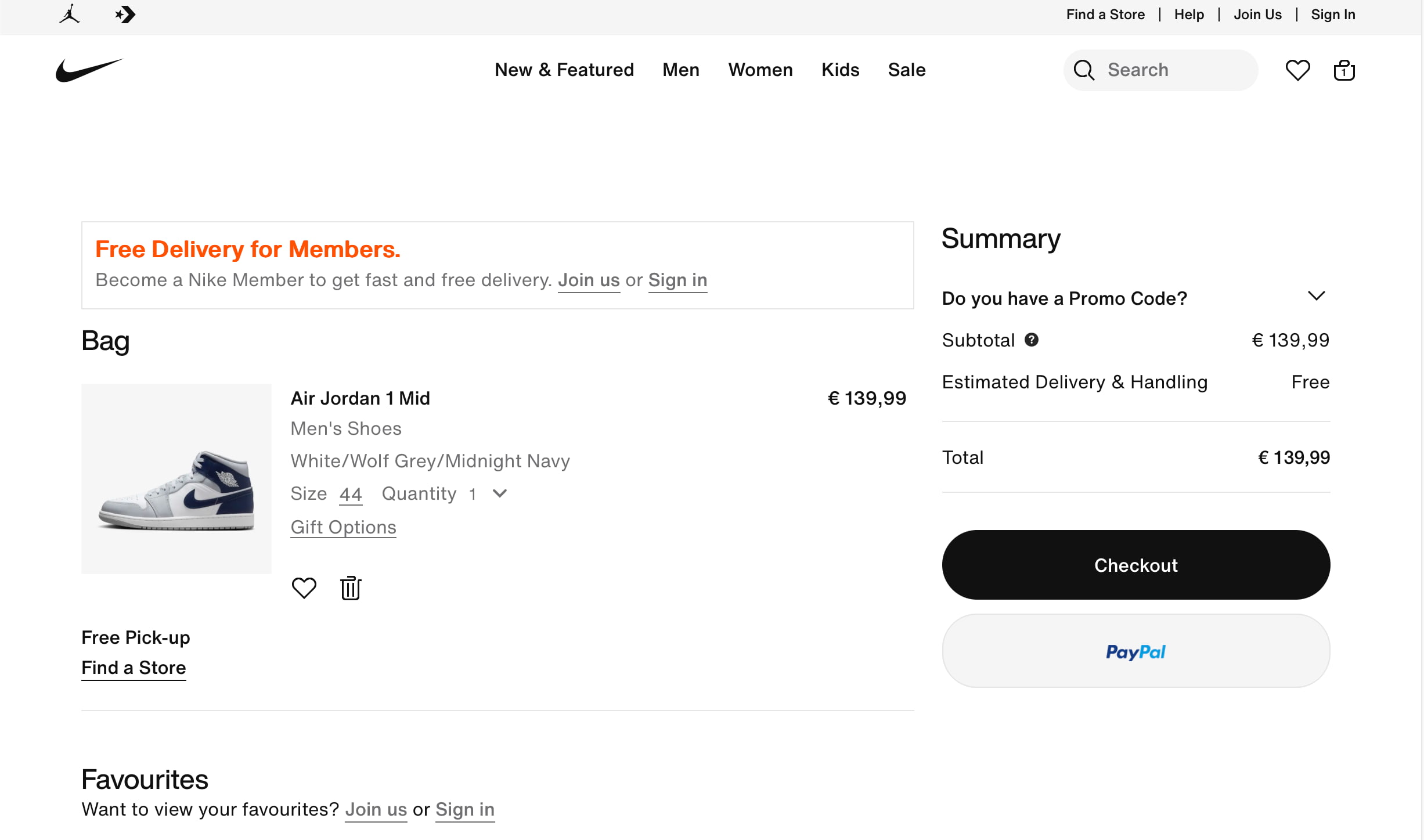
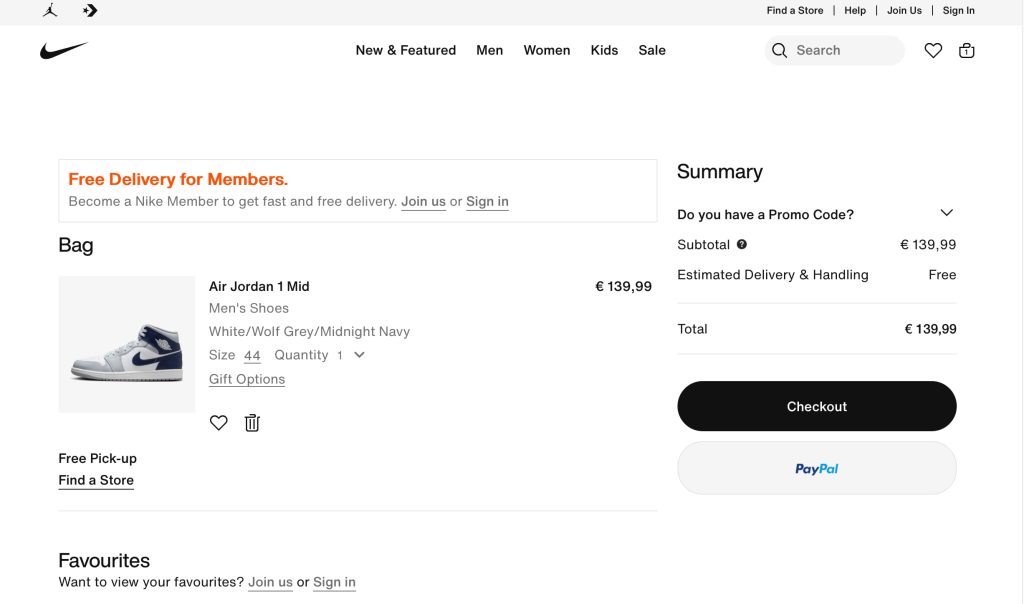
an example of a shoping cart of nike.com showing a nike air jordan in the cart
Nike has a nice and clean shopping cart with options to save favorite items quickly

Causes of cart abandonment

The reasons for cart abandonment can be surprisingly straightforward, often overlooked during checkout optimization. While many focus on preventing abandonment, it’s crucial to understand why users utilize shopping carts initially. As we discussed, could cultural practices or economic conditions influence shopping behavior, leading to varying patterns of cart usage across different regions?

Purpose of shopping carts

Research by Close and Kukar-Kinney (2010) highlights that the primary focus shouldn’t solely be on abandonment but also the initial use of shopping carts. Many assume users add products to carts to buy them, but this isn’t always true. A significant portion of users treat shopping carts as wish lists or use them to calculate total costs, including potential hidden fees.

This raises the question: How do digital shopping habits compare to traditional in-store shopping, and what lessons can be drawn from other industries, such as hospitality or travel, where reservations and bookings often follow similar patterns?

Kaufman-Scarborough and Lindquist (2002) also note that shopping carts serve purposes beyond immediate purchases. This implies that “abandonment” might be an oversimplification. Some users explore and tally future purchases without intending to buy immediately.

Session time-out concerns

Session time-out refers to the automatic expiration of a user’s shopping session on an ecommerce website after a period of inactivity. When a session times out, the items in the user’s shopping cart may be lost or require re-addition, leading to frustration and potential abandonment. This technical limitation can significantly impact the shopping experience, particularly for users who take longer to make purchase decisions or are interrupted during the process.

To mitigate abandonment caused by session timeouts, you can extend session durations. You can also implement persistent shopping carts or reminders to encourage users to complete their purchases before the session expires.

Challenges in understanding cart usage

Determining why users abandon carts and how they use them is challenging but possible. Studies and enhanced ecommerce analytics in tools like Google Analytics can provide insights. Exit intent surveys, which appear when users attempt to leave, can offer valuable feedback on abandonment reasons.

The famous Baymard Institute statistics show an average cart abandonment rate of 70.19% (as of September 2024), highlighting the need for comprehensive analysis. Comparative studies across different retail sectors or geographic markets reveal unique patterns or universal truths about consumer behavior.

Reasons for abandoned shopping carts

The Baymard Institute identified several causes of cart abandonment. Here are the main ones:

  • 48% Extra costs too high (shipping, tax, fees)
  • 26% The site wanted me to create an account
  • 25% I didn’t trust the site with my credit card information
  • 23% Delivery was too slow
  • 22% Too long/complicated checkout process
  • 21% I couldn’t see/calculate the total order cost up-front
  • 18% Returns policy wasn’t satisfactory
  • 17% Website had errors/crashed
  • 13% There weren’t enough payment methods
  • 9% The credit card was declined

There are many opportunities to apply insights from mobile app user experience research to improve mobile shopping cart processes. Technological advancements, such as AI and machine learning, can also personalize and streamline the shopping experience on mobile devices.

Suggestions for improvement

To effectively address cart abandonment and its alternative uses, we must consider a range of strategies that incorporate diverse perspectives and innovative thinking. Here are some suggestions that help improve the shopping cart experience.

1. Transparent pricing and costs

While clearly displaying prices and additional costs like shipping is fundamental, consider how cultural perceptions of pricing transparency might vary. In some regions, consumers expect negotiation, while others value fixed, upfront pricing. Brands can experiment with dynamic pricing models or offer region-specific promotions to align with local expectations.

2. Diverse and flexible payment options

Beyond merely outlining payment methods, consider integrating payment innovations such as digital wallets or microfinancing options. These can cater to tech-savvy consumers and those with limited access to traditional banking. Offering payment flexibility reduces barriers and aligns with the growing trend toward financial inclusivity.

3. Streamlined checkout process

Defining checkout steps is crucial, but personalizing the process is equally important. Use data analytics to tailor the checkout experience based on user behavior, such as pre-filling information for returning customers or offering fast-track options for those in a hurry. To minimize friction, consider implementing one-click checkouts, similar to Amazon’s model.

4. Wish lists and alternative engagements

Implementing wish lists is a practical way to differentiate between genuine abandonments and alternative cart uses. However, expanding beyond traditional wish lists to include social commerce features — like sharing wish lists with friends or integrating with social media platforms — can enhance the shopping experience. This builds community and taps into the influence of peer recommendations. Retargeting and cart recovery email campaigns are also valid options.

5. Social commerce and community-driven experiences

Social commerce and community-driven shopping are reshaping how consumers interact with brands. By creating platforms where users can collaborate, share reviews, or engage in group buying, businesses can foster a sense of community that reduces shopping cart abandonment. These experiences transform shopping from a solitary activity to a shared journey, increasing consumer commitment.

6. Ethical and sustainable practices

Aligning with consumer values on sustainability and ethics can mitigate cart abandonment. Clearly communicate how products meet ethical standards, whether through sustainable sourcing or fair trade certification. Transparency can reassure consumers and reduce shopping cart abandonment driven by ethical concerns.

7. Technological integration and innovation

Explore technologies like augmented reality to offer virtual try-ons or 3D product visualizations. These innovations can reduce uncertainty and enhance consumer confidence, particularly in fashion and home furnishings, where physical interaction with products is traditionally valued.

8. Feedback and iterative improvement

Encourage consumer feedback at various shopping journeys to identify pain points leading to abandonment. Based on this feedback, implement iterative improvements, ensuring the shopping experience evolves in line with consumer expectations and technological advancements.

These strategies give businesses insight into the issues and solutions that reduce shopping cart abandonment rates. As a business owner, you want to improve the overall shopping experience for your customers. This comprehensive approach addresses practical and emotional aspects of consumer behaviors. The goal should be to foster loyalty and encourage conversion in a difficult ecommerce environment.
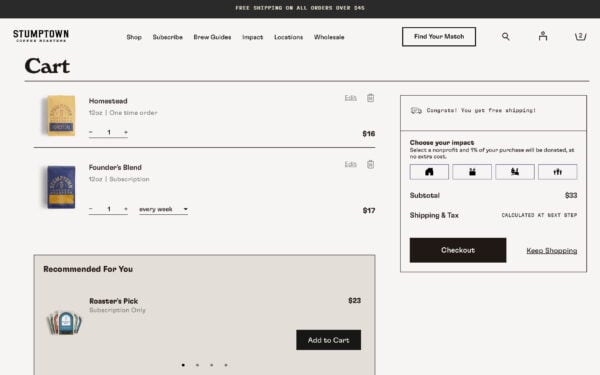
Stumptown Coffee Roasters offers different ways to shop, including a subscription and an option to donate part of the purchase

What’s your view on abandoned shopping carts?

How do you handle shopping cart abandonment on your site? Do you provide wish lists? Consider these insights to optimize your website’s shopping experience. Maybe you borrowed other innovative strategies from other industries or cultures for your approach to reducing cart abandonment? If not, take a look around and get inspired!

The post Understanding shopping cart abandonment appeared first on Yoast.

Continue Reading

Previous: Improve your Shopify store’s visibility with AI in Yoast SEO
Next: Dropshipping SEO makes your Shopify store successful

Related Stories

Still not ready for Black Friday 2025? Here is your last minute rescue plan
9 min read
  • Ecommerce SEO
  • WordPress
  • Yoast SEO

Still not ready for Black Friday 2025? Here is your last minute rescue plan

October 16, 2025
A detailed guide to optimizing ecommerce product variations for SEO and conversions
6 min read
  • Ecommerce SEO

A detailed guide to optimizing ecommerce product variations for SEO and conversions

September 5, 2025
How much does it cost to build a website?
8 min read
  • Content SEO
  • Ecommerce SEO
  • User eXperience (UX)
  • WordPress
  • Yoast SEO

How much does it cost to build a website?

September 2, 2025

Recent Posts

  • A recap of the October 2025 SEO Update by Yoast
  • What is anchor text, and how can you improve your link texts?
  • The psychology of scannable content and bullet points
  • Still not ready for Black Friday 2025? Here is your last minute rescue plan
  • First things first: writing content with the inverted pyramid style

Recent Comments

No comments to show.

Archives

  • October 2025
  • September 2025
  • August 2025
  • July 2025
  • April 2025
  • March 2025
  • February 2025
  • January 2025
  • December 2024
  • November 2024
  • October 2024
  • September 2024

Categories

  • Accessibility
  • Advertising ROI
  • AI and SEO
  • AI and web scraping integration
  • AI tools for web scraping
  • AI web scraping benefits
  • AI-powered web scraping
  • API architecture
  • API best practices
  • API design patterns
  • API development
  • API for ad campaigns
  • API for advertising
  • API for developers
  • API for exchange rates
  • API for SEO
  • API implementation
  • API integration patterns
  • API security patterns
  • Automated price scraping
  • Beginner's guide data mining
  • Best practices Gemini API
  • blog
  • Blog SEO
  • Blogging
  • Branding
  • Business currency tools
  • Business data collection AI
  • Content SEO
  • Currency API integration
  • Currency conversion API
  • Currency exchange API
  • Data extraction
  • Data extraction API
  • Data extraction for businesses
  • Data extraction methods
  • Data extraction tutorial
  • Data mining
  • Data mining techniques
  • Data mining vs data extraction
  • Data mining YouTube
  • Data Privacy
  • Duplicate content
  • E-commerce data scraping
  • E-commerce image search
  • Ecommerce SEO
  • Exchange rates API
  • Facebook
  • free seo audit
  • Gemini API
  • Gemini API tutorial
  • Google ad management
  • Google ad performance
  • Google Ads API
  • Google algorithm
  • Google Analytics
  • Google API best practices
  • Google API design
  • Google API development
  • Google API for news updates
  • Google API integration
  • Google cloud API
  • Google currency tools
  • Google data extraction
  • Google data mining
  • Google data scraping
  • Google developer tools
  • Google finance API
  • google image api
  • Google image search integration
  • google keyword research tool
  • google news api
  • Google News API benefits
  • Google News automation
  • Google rank tracker
  • Google rank tracking
  • Google scraping guidelines
  • Google scraping tools
  • Google scraping with AI
  • google search api
  • Google Search Console
  • Google SEO tools
  • Google SERP analysis
  • Google text scraping
  • Google visual search API
  • Google web scraping tips
  • Google web scraping tools
  • Gutenberg
  • Holistic SEO
  • Image recognition API
  • Internal linking
  • keyword ranking api
  • Keyword research
  • Learn text scraping
  • Link building
  • Local SEO
  • Machine learning API
  • Marketing
  • Mobile SEO
  • Monitor news in real time
  • News SEO
  • News tracking tools
  • News updates API
  • OpenGraph
  • Pinterest
  • Price comparison scraping
  • Price monitoring tools
  • Price scraping
  • Product image search
  • Product search by image
  • Python web scraping
  • Python YouTube scraping
  • Readability
  • Real-time exchange rates
  • Real-time news tracking
  • Redirects
  • RESTful API design
  • Rich Snippets
  • Schema.org
  • Scrape prices from websites
  • Security
  • SEO and WordPress news
  • SEO basics
  • SEO copywriting
  • SEO data extraction
  • SEO tools
  • SEO tools API
  • serp tracking
  • SERPHouse API
  • Shopify
  • Site structure
  • Social media
  • Software releases and updates
  • Technical SEO
  • Text data extraction
  • Text extraction tools
  • Text scraping tutorial
  • Uncategorized
  • User eXperience (UX)
  • Video data extraction
  • web scraping
  • Web scraping API
  • Web scraping for beginners
  • Web scraping prices
  • Web scraping tutorial
  • Web scraping YouTube
  • Webmaster tools
  • Website Maintenance
  • Website ranking
  • WooCommerce
  • WordPress
  • X
  • XML Sitemap
  • Yahoo ads analytics
  • Yahoo Ads Results API
  • Yahoo advertising tools
  • Yoast AI Brand Insights
  • Yoast SEO
  • Yoast SEO for Shopify
  • Yoast SEO Premium
  • YouTube API
  • YouTube data scraping
  • YouTube scraping tools

About Author

AF themes

We mainly focus on quality code and elegant design with incredible support. Our WordPress themes and plugins empower you to create an elegant, professional and easy to maintain website in no time at all.

Trending News

A recap of the October 2025 SEO Update by Yoast 1

A recap of the October 2025 SEO Update by Yoast

October 23, 2025
What is anchor text, and how can you improve your link texts? 2

What is anchor text, and how can you improve your link texts?

October 21, 2025
The psychology of scannable content and bullet points 3

The psychology of scannable content and bullet points

October 17, 2025
Still not ready for Black Friday 2025? Here is your last minute rescue plan 4

Still not ready for Black Friday 2025? Here is your last minute rescue plan

October 16, 2025
First things first: writing content with the inverted pyramid style 5

First things first: writing content with the inverted pyramid style

October 14, 2025
What does Yoast SEO do? 6

What does Yoast SEO do?

October 11, 2025
The Flesch reading ease score: Why & how to use it 7

The Flesch reading ease score: Why & how to use it

October 6, 2025

Connect with Us

  • Facebook
  • Twitter
  • Linkedin
  • VK
  • Youtube
  • Instagram

You may have missed

A recap of the October 2025 SEO Update by Yoast
3 min read
  • Uncategorized

A recap of the October 2025 SEO Update by Yoast

October 23, 2025
What is anchor text, and how can you improve your link texts?
6 min read
  • Internal linking
  • Link building
  • SEO basics
  • Site structure

What is anchor text, and how can you improve your link texts?

October 21, 2025
The psychology of scannable content and bullet points
11 min read
  • Content SEO
  • SEO copywriting

The psychology of scannable content and bullet points

October 17, 2025
Still not ready for Black Friday 2025? Here is your last minute rescue plan
9 min read
  • Ecommerce SEO
  • WordPress
  • Yoast SEO

Still not ready for Black Friday 2025? Here is your last minute rescue plan

October 16, 2025

About VR Agency 360

Recent Posts

  • A recap of the October 2025 SEO Update by Yoast
  • What is anchor text, and how can you improve your link texts?
  • The psychology of scannable content and bullet points
  • Still not ready for Black Friday 2025? Here is your last minute rescue plan
  • First things first: writing content with the inverted pyramid style
  • Facebook
  • Twitter
  • Linkedin
  • VK
  • Youtube
  • Instagram
Copyright © All rights reserved. | DarkNews by AF themes.